

Most offshore hiring problems do not come from talent or location. They come from something far more controllable: poorly defined offshore staffing roles and responsibilities.
You see this often. A business hires offshore support to “help with admin” or “handle accounts.” At first, it feels like progress. Costs drop, and tasks move. However, within weeks, issues appear. Work becomes inconsistent, communication slows, and the owner steps back in to fix gaps.
As a result, the expected savings start to erode. Time is lost, and frustration builds. Trust drops, which is harder to recover than the cost.
In today’s Australian market, where wages are rising and skilled talent is scarce, this becomes a real commercial risk. Whether you run an SME or a healthcare practice, clear offshore staffing roles and responsibilities are essential. Every role must deliver value from the start.
What Strong Offshore Staffing Roles and Responsibilities Look Like
Clear offshore staffing roles and responsibilities are not just a hiring detail. They are a commercial lever. They define how the role supports your business and where it creates value.
First, strong roles focus on outcomes, not tasks. When success is clearly defined, expectations are aligned and performance becomes measurable. This matters in small teams where every hour counts.
Second, the role must sit inside your workflow. Offshore staff should not be “extra help.” They should be part of the system, connected to your processes, tools, and team rhythm. This reduces friction and improves consistency.
Third, ownership must be clear. When offshore staffing roles and responsibilities are vague, work slows and decisions stall. Clear ownership allows your offshore hire to act without constant direction, freeing up your time.
Finally, tools and processes must be defined. When systems and workflows are clear, onboarding is faster and errors are reduced. This protects quality from the start.
Example 1: Virtual Admin and Office Support Roles and Responsibilities
Admin roles are often the starting point, and also where offshore staffing roles and responsibilities are most often unclear. A role described as “manage emails” or “do admin” creates immediate ambiguity.
Without clear expectations, priorities are guessed. Important tasks may be missed or delayed. Over time, this leads to rework and frustration, which defeats the purpose of hiring support.
A stronger approach defines offshore staffing roles and responsibilities around inbox management, scheduling, and data accuracy. It connects admin work to billing, communication, and daily operations.
The outcome becomes clear. Instead of just completing tasks, the role reduces your administrative load and gives you back time to focus on higher-value work.
Role Title: Virtual Admin & Office Support
Reports To: Practice Manager / Business Owner
Role Purpose:
Manage administrative workflows to ensure timely communication, accurate records, and smooth scheduling.
Key Outcomes:
Inbox managed within 24-hour response time
Calendar coordination with minimal conflicts
CRM maintained with 95%+ accuracy
Reduction of owner/admin workload by 10–15 hours per week
Responsibilities:
Manage and prioritise inbox communications
Coordinate appointments and schedules
Maintain CRM data accuracy
Support billing and admin workflows
Escalate urgent issues when required
Tools & Systems:
Outlook or Gmail, Practice Management Software, CRM system, Xero
Success Metrics:
Response time compliance
Scheduling accuracy
CRM accuracy
Admin backlog reduction
Example 2: Offshore Accounts and Finance Roles and Responsibilities
Finance roles carry direct commercial impact, yet offshore staffing roles and responsibilities are often too broad. Describing a role as “bookkeeping” or “invoicing” lacks direction.
This leads to reactive work. Invoices go out, but follow-ups are inconsistent. Reports exist, but do not guide decisions. Cash flow remains unclear.
A stronger definition of offshore staffing roles and responsibilities focuses on managing the full accounts receivable cycle. It ensures invoices are issued on time, overdue accounts are followed up, and financial reports are produced regularly.
The outcome shifts to control. Payments are faster, overdue invoices are reduced, and cash flow visibility improves. In a high-cost environment, this supports stability.
Role Title: Offshore Accounts & Finance Support
Reports To: Finance Manager / Business Owner
Role Purpose:
Manage accounts receivable and reporting to improve cash flow visibility and payment timelines.
Key Outcomes:
Invoices issued within 24–48 hours
Reduction in overdue invoices by 20%
Weekly financial reports delivered on time
Improved cash flow visibility
Responsibilities:
Manage accounts receivable process
Issue invoices accurately
Monitor and follow up overdue accounts
Prepare weekly financial reports
Support reconciliations
Tools & Systems:
Xero, MYOB, Excel/Google Sheets
Success Metrics:
Days Sales Outstanding (DSO)
Invoice accuracy
Overdue invoice reduction
Reporting timeliness
Example 3: Data, Reporting, and IT Roles and Responsibilities
Data roles are often underspecified, which limits the value of offshore staffing roles and responsibilities. Terms like “data entry” or “reports” keep the work low-impact.
Without clear direction, outputs are static. Reports are produced but not used. Data is captured but not structured for insight.
A stronger definition of offshore staffing roles and responsibilities focuses on building dashboards, tracking KPIs, and maintaining clean datasets. It connects reporting directly to decision-making.
The outcome becomes actionable insight. Decisions are made faster and with more confidence, which is critical for managing performance and costs.
Role Title: Data, Reporting & IT Support
Reports To: Operations Manager / Business Owner
Role Purpose:
Turn business data into actionable insights through structured reporting and dashboards.
Key Outcomes:
Real-time KPI dashboards
Improved data accuracy
Faster reporting turnaround
Stronger decision support
Responsibilities:
Build and maintain dashboards
Track key performance indicators
Clean and validate datasets
Automate reporting processes
Support data flows
Tools & Systems:
Power BI / Tableau, Excel, CRM systems
Success Metrics:
Dashboard adoption
Data accuracy
Reporting turnaround time
Stakeholder satisfaction
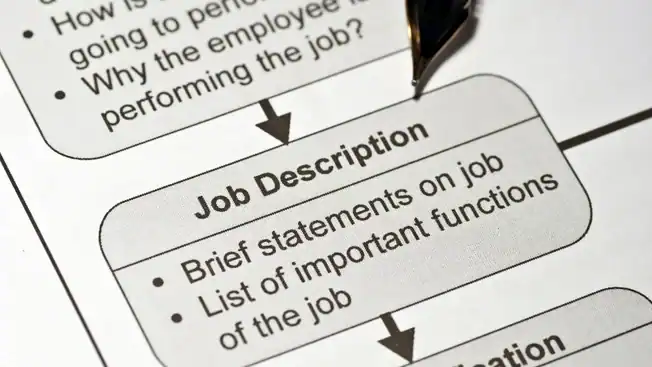
How to Structure Offshore Staffing Roles and Responsibilities Properly
A clear role purpose is the starting point. It defines why the role exists and what problem it solves. Without this, offshore staffing roles and responsibilities remain disconnected from business value.
Key outcomes should follow and must be measurable. This ensures the role delivers results, not just activity. It also allows you to manage performance objectively.
Responsibilities should support those outcomes. When offshore staffing roles and responsibilities are aligned this way, the role stays focused and avoids unnecessary scope creep.
Clarity around tools, reporting lines, and success metrics then creates consistency. It improves onboarding and allows the role to deliver value sooner.
Common Mistakes in Offshore Staffing Roles and Responsibilities
Vague offshore staffing roles and responsibilities remain the most common issue. If a role could apply to any business, it is not specific enough.
Overloading roles is another problem. Combining multiple functions into one position often leads to average results across all areas.
Undefined outcomes also create confusion. Without clear success measures, offshore staffing roles and responsibilities become difficult to manage.
Finally, weak onboarding slows everything down. Early confusion affects performance and retention, which is costly in a tight labour market.
Clarity in Offshore Staffing Roles and Responsibilities Drives Performance
Offshore hiring works when it is approached strategically. The quality of offshore staffing roles and responsibilities shapes the quality of the hire.
Clear roles lead to stronger performance and better engagement. Over time, this builds trust and consistency within your team.
For Australian SMEs and healthcare businesses facing wage pressure and talent shortages, this creates stability and control.
Good roles lead to good hires, and good hires drive growth.
Defining Offshore Staffing Roles and Responsibilities
If you are considering offshore hiring, start by defining the roles and responsibilities for offshore staffing. Do this before looking for candidates.
Map how the role fits into your workflow. Clarify ownership, tools, and outcomes. This ensures the role adds value from day one.
Treat offshore hiring as a capability decision, not just a cost decision. That shift changes the results.
If you want to get it right from the start, we help define offshore staffing roles and responsibilities before hiring so you get the right person the first time.